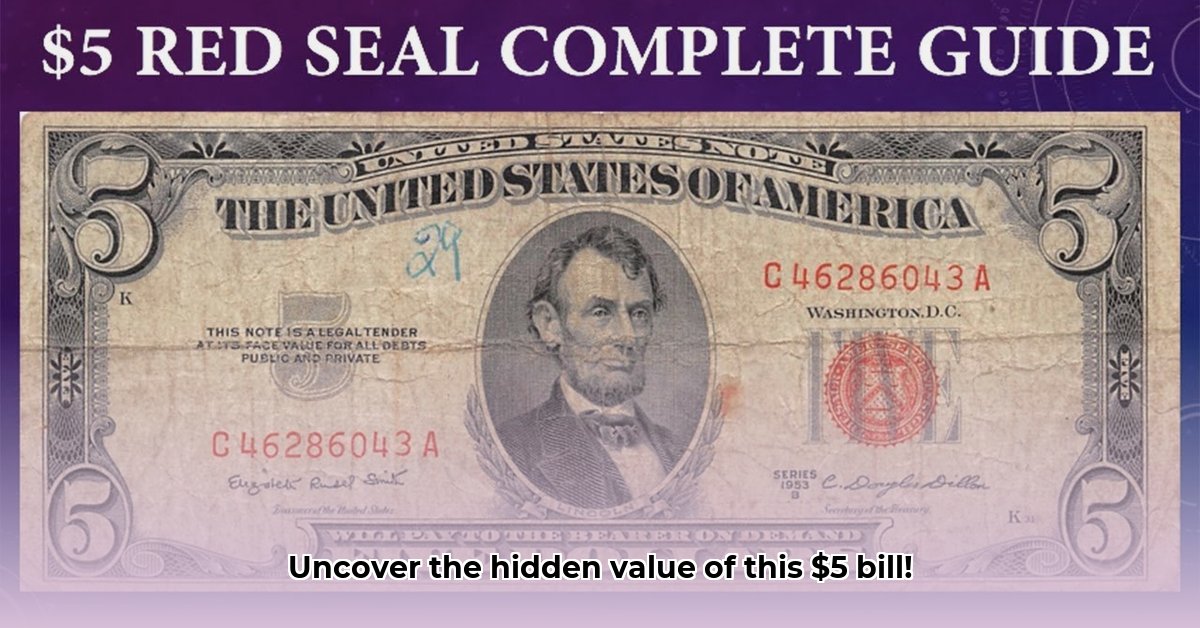
Identifying Your 1953 Red Seal $5 Bill
Owning a 1953 red seal $5 bill could mean owning a piece of American history—and potentially, a valuable asset. This guide helps you understand these unique banknotes, from identification and valuation to safe buying and selling practices. Let's begin with the key features. For more investment advice, check out this helpful resource.
The most striking feature is the vibrant red Treasury seal, located on the right side of the note. The serial number is also printed in red. Abraham Lincoln is prominently featured on the front, while the Lincoln Memorial adorns the reverse. These are your initial visual cues. However, there's more to consider than just the color.
Each 1953 red seal $5 bill has a series letter (A, B, C, etc.) near the serial number. This letter indicates the printing run. Some bills are "star notes," replacements for damaged bills, significantly increasing their value. Look for a small star replacing a digit in the serial number.
Spotting Counterfeits
Counterfeit bills exist, so careful examination is critical. Genuine bills have a crisp texture; counterfeits feel flimsy. Scrutinize the printing quality – blurry images or uneven ink are red flags. Hold the note up to the light to check for a faint watermark of Lincoln. When in doubt, seek professional authentication from a reputable numismatist (a coin and currency expert).
Grading and Condition: The Sheldon Scale
The condition of your bill heavily influences its value. Numismatists use the Sheldon Scale, ranging from 1 (Poor) to 70 (Perfect). A pristine, uncirculated bill (65 or higher) will fetch a much higher price than a well-worn bill (10-20). Look for sharp corners, clear details, and the absence of creases, stains, or tears. Even slight imperfections lower the grade. The closer to "mint condition," the higher the value.
Determining Value: Key Factors
Several factors determine the value of your 1953 red seal $5 bill:
- Condition: A bill's condition is paramount. Uncirculated bills are far more valuable.
- Series Letter: Certain series letters might be slightly rarer, potentially affecting value. This is an area of ongoing research within the numismatic community.
- Star Note: The presence of a star note substantially increases value. Collectors actively seek these unique bills.
Value Estimates
Precise value ranges fluctuate due to market dynamics. However, these estimates offer a general idea:
| Condition Grade | Estimated Value Range (USD) |
|---|---|
| 65 (Gem Uncirculated) | $200 - $500+ |
| 55 (Choice Uncirculated) | $100 - $250 |
| 20 (Fine) | $20 - $50 |
| 10 (Good) | $5 - $15 |
Disclaimer: These estimates are approximations. Actual value depends on various factors and market conditions.
Where to Buy, Sell, and Store Your Bill
Reputable online marketplaces and specialized numismatic websites are your best bet for buying and selling. Thoroughly research sellers' reputations. For substantial transactions, use escrow services for secure payments. Store your bill(s) properly – away from light, moisture, and excessive handling – in a protective case.
Investing in 1953 Red Seal $5 Bills: Risk Assessment
Investing in these bills can be profitable but carries risks. While some have shown significant appreciation, market fluctuations are a reality. Diversify your investments. Don't treat this as a get-rich-quick scheme, but rather a potential addition to a broader investment strategy. Consult a financial advisor before making significant investment decisions.
Conclusion
The value of your 1953 red seal $5 bill depends on its condition, rarity, and market factors. Careful examination and research are vital for informed decisions. Happy collecting!